Why patients argue your ₹500 but never the plumber's ₹3,000
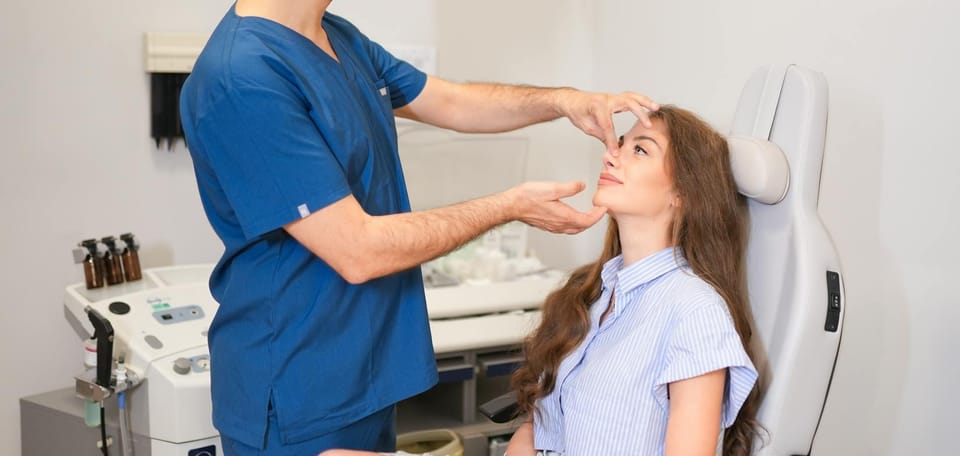
The patient came back on day nine.
Our hospital had a simple policy: return within seven days of your first consultation, and the follow-up was free. Fair. Reasonable. Applied to everyone. This man showed up two days past the window, day nine or ten, and the front desk charged him the consultation fee. What happened next still sits in my gut.
He erupted. Not argued — erupted. "I've never seen a doctor like this! I've never seen a hospital like this!" He stood in the middle of my OPD, shouting at the top of his voice while other patients watched. I tried to de-escalate. Told him I'd see him regardless, that I'd make it worthwhile. Even offered to waive the fee entirely. It didn't matter. He kept going. On and on and on.
That laid a big distaste in my mouth. Not because he was angry. Patients carry enormous stress, and venting is human. But because he was directing his rage at me. I didn't set the consultation fee. The hospital did. I didn't decide the seven-day window. Administration did. Yet there I stood, absorbing fury meant for a system I didn't design, while my actual skill, the reason he came to me in the first place, sat invisible behind a ₹500 argument.
You've had this patient. You've stood in that OPD, absorbing anger about money while wondering when anyone would notice what you actually do. You've watched a patient argue your ₹500 consultation fee, then drive home and pay the plumber ₹3,000 without a second thought. And somewhere in that moment, a small voice asked: why does the plumber get more respect for showing up than you do for 15 years of training?
That question has an answer. And the answer isn't what you think.

The Wrong Thing for Sale
What took me years to understand: the patient wasn't being cheap. He genuinely believed the consultation shouldn't cost anything. Because the information component of what I was selling had become free.
Think about when you last called a plumber. You didn't Google "how to fix a leaking pipe" and then argue with the plumber about his diagnostic fee. You called the plumber precisely because Google failed you. The tap was still leaking. The pipe was still burst. You'd already tried the YouTube tutorial, and it made things worse. By the time the plumber showed up, you were grateful. You didn't question his ₹3,000 because you'd already exhausted the free alternatives.
Now think about your OPD. Your patient walks in having already Googled their symptoms, read three articles, and asked ChatGPT for a diagnosis. They arrive with a printout or a screenshot. They've already consumed the information layer for free. And now you're charging them ₹500 to... give them information? That's what they think is happening. That's why they argue.
The problem isn't the patient's attitude. The problem is that we've been positioned by our training, by hospital systems, by the entire structure of outpatient medicine, to sell the one thing that's now available at zero cost.
I made a decision after that day-nine incident. All financial disputes went to hospital admin. I refused to engage with fee arguments during consultations. "You come to a doctor to solve your health problems," I told my team. "Engage the doctor with health problems, not financial aspects." It was the right boundary. But it didn't solve the deeper problem: why patients saw my consultation as overpriced in the first place.
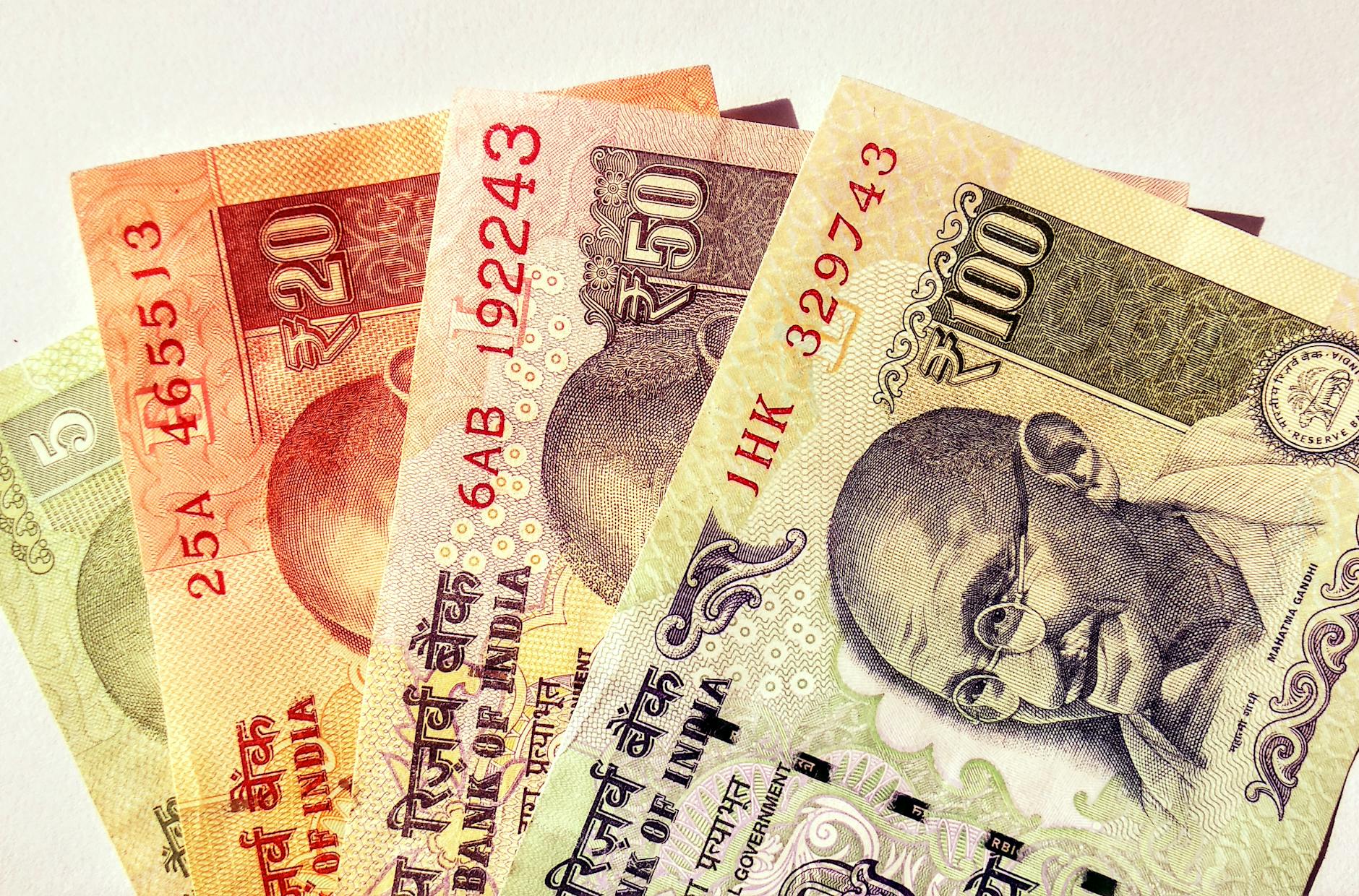
The numbers tell a story that should make every Indian surgeon uncomfortable. The mean consultation fee for a specialist in India is ₹562. A super-specialist charges ₹715. Compare that to Brazil — ₹8,775. Russia — ₹2,500. China — ₹2,250. South Africa — ₹1,800. Indian doctors charge roughly one-third of the next-lowest BRICS country. One-third. For equivalent training, equivalent hours, equivalent responsibility. An orthopaedic consultation in India ranges from ₹500 to ₹1,500. The plumber who fixed your patient's bathroom probably charged more for showing up.
And while we've been quietly accepting these numbers, something else has been happening. In January 2026, OpenAI launched ChatGPT Health, directly linking patient portals to the AI chatbot. 52% of consumers have already used ChatGPT to check medical symptoms. A study published in Medscape found patients rated ChatGPT's answers as comparable to surgeons' answers in accuracy and clarity. OpenEvidence, dubbed "ChatGPT for doctors," doubled its valuation to $12 billion in a single funding round.
Run the numbers yourself: AI diagnostic accuracy sits at 52.1% overall. You're well above 90%. But the patient paid ₹0 for the 52% and is arguing about ₹500 for the 90%+. That's not irrational behaviour. That's what happens when an entire profession positions itself at a level that's being automated.

The Commoditisation Ladder
Among Indian medical professionals, we have a term: "Dr. Google." We joke about it in the doctors' lounge. We roll our eyes when a patient pulls out a printout. But we've missed what Dr. Google actually represents: the first rung of a ladder that technology is climbing, one level at a time, coming for everything we've positioned ourselves to sell.
Professional services commoditise in predictable layers. Every layer that gets commoditised loses its pricing power. Here's where surgery sits on that ladder:
Level 1 — Information. What's wrong with me? What are my options? This is now FREE. Google, ChatGPT, health apps. Done.
Level 2 — Diagnosis. What specific condition do I have? This is being AUTOMATED. AI symptom checkers at 52% accuracy and climbing. Not yet as good as an expert surgeon, but good enough to make the patient feel informed.
Level 3 — Prescription. What should I take for this? PARTIALLY AUTOMATABLE. Telemedicine platforms, standard protocols, cookie-cutter treatment plans.
Level 4 — Procedure. Can someone physically fix this? IRREPLACEABLE. Surgery. Hands-on intervention. No algorithm, no chatbot, no robot can do this autonomously.
Level 5 — Judgement Under Uncertainty. It's 3 AM, the patient is crashing, you have thirty seconds to decide. HIGHEST VALUE. The decision that only comes from years of pattern recognition under extreme pressure. The thing that saves lives when nothing else can.
The question you need to answer honestly: which level are you selling?
If your 15-minute consultation is spent explaining, counselling, and educating, you're competing at Level 1. Against free. If what you're selling the patient is "I'll tell you what's wrong," ChatGPT already did that. For nothing.
But if a patient needs a fracture reduced, a ligament reconstructed, a joint replaced — no app on earth can do that. A 20-year-old walks in with a fracture neck of femur, and the treatment strategy is completely different from a 70-year-old with the same fracture. Throw in the fact that the patient is in the ICU with a head injury, and the protocol changes again. These layered, contextualised decisions, ChatGPT cannot make. Not because the data isn't there, but because judgement isn't data. Judgement is pattern recognition earned through thousands of cases, hundreds of complications, and dozens of sleepless nights where the textbook answer was the wrong answer.
Google can't hold a scalpel. Neither can ChatGPT. That is your moat.
I understood this early. You cannot compete with Google's computing power. You cannot out-index a search engine that has catalogued every medical paper ever published. Knowledge was never the issue. It's freely and increasingly available, and honestly, it should be. The issue was always technique. Surgery. Patient selection. Recognising which patients qualify for intervention and which don't. Understanding which procedure modifications benefit a particular patient. Adjusting the rehab protocol based on a dozen variables that no algorithm has been trained on. All of these sit at Levels 4 and 5. All of these are untouched by AI. And most of us aren't even standing in that moat.
The Plumber's Lesson
I've heard a patient tell me how their previous doctor responded to their Google research with: "Are you the doctor or am I?" That kind of response paints you as arrogant. And arrogance isn't authority. It's insecurity wearing a white coat.
The plumber doesn't do this. When a customer says, "I watched a YouTube video about this leak," the plumber doesn't get defensive. He nods, picks up his wrench, and fixes the pipe. His value isn't threatened by YouTube because the customer already tried YouTube and failed. The plumber's advantage: the customer has exhausted the free alternatives before calling him.
The surgeon's problem is the opposite: the patient hasn't exhausted the free alternatives yet. They come to you first, before Google has failed them. So they still believe the information is the product. And when you charge ₹500 for information they could get for free, they resent it.
The fix isn't to argue harder about your fees. The fix is to position the consultation as the gateway to what only you can do. Not the product itself.
A colleague put it simply once: "Google told you it might be a meniscus tear. I can tell you whether this specific tear, in your specific knee, needs surgery or will heal on its own. That's a different question." That single reframe changes the entire dynamic. It's not adversarial. It positions the chatbot as the warm-up act and you as the main event.
If you do know the answer in detail because you've read and understood, tell the patient. If you don't know, say so. If they're wrong, explain why, without condescension. Earn the trust. Because here's the thing about surgery: only when you trust a surgeon will you lay down and let them operate. You earn that trust through humility about knowledge and confidence about skill. Not the other way around.
There's something else I noticed during my years at Apollo, about a decade back. Several surgeons there charged ₹1 lakh per procedure as their surgical fee. Other surgeons in the same hospital, similar training, charged ₹20,000. Five times less. And the thing that should make you stop and think: the surgeons charging ₹1 lakh had full patient lists. Not just full — overflowing. Patients waited weeks to see them.
Something shifted in my understanding when I connected this to a memory from childhood. Rickshaw pullers used to charge ₹2 to ₹4 per ride. Every single ride involved haggling — "₹4 is too much, ₹3 is right." The same people would walk into a restaurant, see the menu prices, and either eat or leave. Nobody sat there bargaining with the restaurant owner about his rates.
At higher prices, haggling disappears. Not because the patient is richer. Because the price itself signals a different category. When you charge ₹20,000, you attract patients who compare you to other ₹20,000 surgeons. When you charge ₹1 lakh, you attract patients who've already decided they want the best available. They don't argue. They don't Google alternatives. They've self-selected into a world where price is proof of value, not a barrier to entry.
We fix a price: if you're willing, come in; otherwise, go somewhere else. That's what the restaurant does. That's what the premium surgeon does. India is an enormous country with diverse income groups. Even if you price higher than you think you should, you will find patients willing to pay — as long as your service matches the promise. What's non-negotiable is the quality. Price high and deliver high. The patients who come won't haggle. The patients who haggle were never your patients to begin with.
Where Do You Go from Here?
The market is splitting in two. There is no middle anymore. AI is absorbing Levels 1 and 2 of the Commoditisation Ladder. Telemedicine is chipping away at Level 3. What remains, what will always remain, are Levels 4 and 5: the procedure and the judgement.
66% of physicians already use AI tools, up 78% from 2023. 80% of hospitals use AI for care and workflow. And yet, AI diagnostic accuracy is 52.1% compared to expert surgeons well above 90%. That gap is your moat. But only if you stand in it.
We still don't have autonomous cars on roads, despite Tesla's promises. We still need pilots in cockpits, despite autopilot handling most of the flight. Why? Because high-stakes decisions require human judgement. Because catastrophic failure is unacceptable. Surgery is the highest-stakes procedure a patient will ever face. Every surgical robot on the market is controlled by a surgeon's hands — not one operates autonomously. We are far from that reality.
Your patients need to see this. Not your explanation of their condition. ChatGPT handles that well enough. Not your diagnosis. AI is getting there. They need to see your hands. Your outcomes. Your before-and-after X-rays. Your walking patients. The 3 AM decision that saved someone's life. Make the moat visible. The plumber doesn't have a commoditisation problem because the broken pipe is visible. Your surgical skill is invisible until you choose to make it visible.
I'll be honest: I'm not entirely sure why it took me so long to see this clearly. I spent years absorbing the sting of fee arguments, years watching patients challenge me with information from the internet, years feeling undervalued for work that should command respect. I should have understood sooner.
But I also know this: the system trains you to sell information. Medical education is built around knowledge transfer. Exams test knowledge. Conferences reward knowledge. Your entire professional identity gets framed around what you know. Nobody sits you down and says: "Your knowledge is becoming a commodity. Your hands are not. Position accordingly."
So start here. This week, in your next consultation, try this: when a patient presents with information from Google or ChatGPT, don't compete with it. Don't dismiss it. Don't respond with "Are you the doctor or am I?"
Instead: validate what they found, then pivot.
"You're right — that could be a meniscus tear. ChatGPT is good at identifying possibilities. But I can tell you whether this specific tear, in your specific knee, with your specific activity level, needs surgery or will heal on its own. That's a different question entirely."
One sentence. One reframe. It positions you at Level 4, not Level 1. And the patient stops seeing you as competition for Google and starts seeing you as the person Google cannot replace.
The surgeon you'll be in five years depends on where you position yourself today. Not on how many patients you see. Not on how many hours you work. Not on how low you set your fees to fill your OPD. On where you stand on the ladder.
Google can't hold a scalpel. Neither can ChatGPT. Stop selling what they give away for free. Start selling what only your hands can do.
Author's Note: This is personal for me. I've stood in that OPD absorbing anger about fees I didn't set. I've watched patients value a plumber's house call more than my consultation. The day I stopped competing on information and started positioning around what only I could do with my hands — that's the day the arguments stopped. Not because I got better at arguing. Because I stopped selling the wrong thing.
Further Reading
For those who want to go deeper:
1. ChatGPT Competes With Surgeons in Patient Q&A — Medscape
2. Consultation fees of Indian doctors: the myth demystified — Journal of Postgraduate Medicine
3. Surgeons Are Prioritizing Patients amid the Corporatization of Healthcare — American College of Surgeons Bulletin
4. How a plumber charges more than a neurosurgeon — KevinMD
5. Beware the commoditization trap — how can professional services differentiate in the new normal? — Diginomica


Member discussion