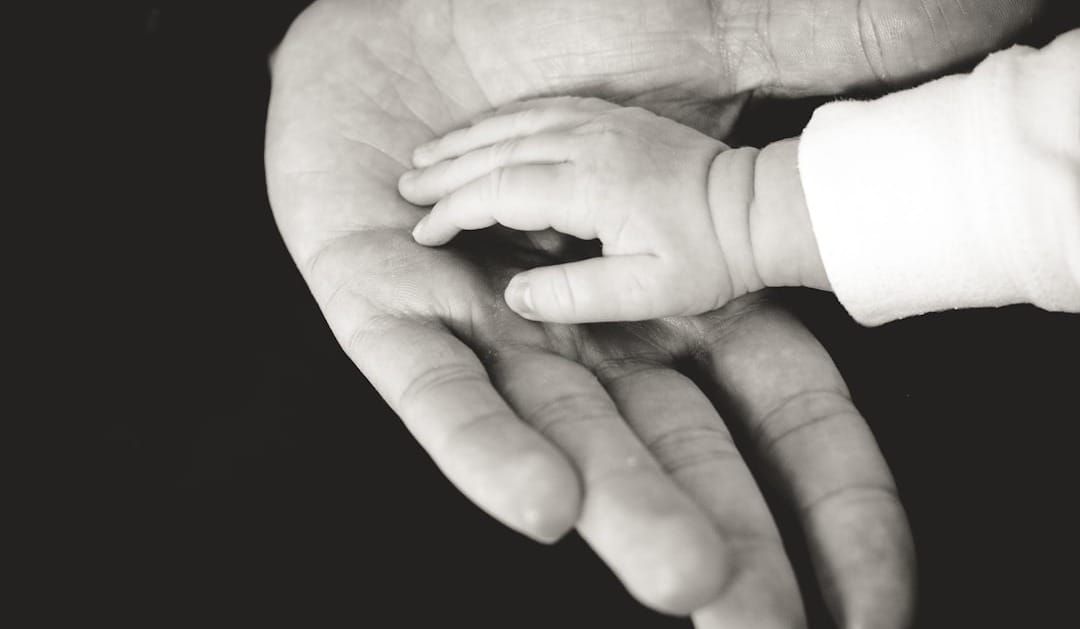
It took me longer to dial my own father's number than it has taken me to finish some operations.
I sat with the phone in my hand and did nothing. A surgeon. A new son asleep in the next room. A credit card already maxed out, and a plane ticket I could not afford to buy. My thumb hovered over the call button the way it has never once hovered over a scalpel. Then I pressed it, and I said the three words I had spent my whole adult life avoiding. "I need money."
Let me back up. Because the phone call wasn't the disaster. The phone call was the day I started finding out what I had actually built with my life — and how little of it was mine.
In 2014 my son was a few months old. I was dropped from the group I worked with; I was on my own. One week I had somewhere I belonged. The next week I didn't. Same hands. Same training. Same willingness to get out of bed at 3 AM for a stranger's emergency. None of that changed. And none of it stopped the floor going out from under me in seven days.
You know the feeling, even if your details are different. The ground you trusted turns out to be someone else's floor, and you were standing on it only because they let you. You did the work. You were good with your hands. And you still woke up one morning with no ward to walk into and no name on anyone's list. That is the part nobody prepares you for in training — that being good at the job and being safe in the job are two completely different things.
The expenses had just multiplied, the way they do when there's a baby in the house. My savings were close to nothing. I say close, because there was one thing I would not touch. Every month a small automatic investment left my account for a fund I had promised myself I would never stop feeding, no matter how bad things got. That month was as bad as things got. The debit went out anyway. It was the only thing I got right that year, and I didn't understand why it mattered until much later.
Meanwhile, money I was actually owed never came. Some of the surgeons I had operated for still hadn't cleared my dues, and I never chased them for it. I told myself I was a professional, and professionals don't beg for what's theirs. In hindsight that wasn't principle. It was pride. Either way, the account stayed empty.
I won't dress up what that year did to me. Every surgeon carries a small private belief that he is somehow essential. That year took mine and broke it on the floor. It put my face down on the ground and held it there. And I deserved it — because when I finally made myself look, I saw I had built almost nothing that could hold me.
Underneath the money was a quieter question, the kind that only visits at 2 AM. When the ground gave way, who had actually held me up over the years — and who hadn't? Not a grievance. Just an honest confusion about where my support had really come from. I sat with that question for months before I understood I had been looking for the answer in completely the wrong place.

The struggle did not end that year. It ground on for the better part of two years — footing found, then lost, then found again — and I was no less broke the day it finally led somewhere.
Then came the interview.
There was a visa and a medical-board interview waiting for me in Oman. I didn't know it that morning, but that single trip was the rest of my life — the one door my entire future had to pass through. Miss it, and there was no second date. No reschedule. No plan B.
And I could not afford the tickets. The card was maxed. No float to draw on. No employer whose job it was to care. No clever way around a plane fare I simply did not have. My whole future was sitting on the other side of a flight I could not pay to board.
That is what finally put the phone in my hand.
So I called my father, and I said it slowly, because the words fought me the whole way out. "I need some money, Dad."
He said, "It's fine. How much do you need?"
He did not ask why. He did not ask what for. He did not ask when he'd get it back. He already knew I was struggling, and in the space of one sentence he decided that the explanation I had braced myself to give was not a price he needed me to pay.
Here is the part I have never been able to explain to anyone who wasn't there. The not-asking hurt more than any question would have. In that kind of moment the silence pokes you, pierces through your heart. When someone loves you enough to skip the interrogation — to spare you even the dignity of justifying yourself — it undoes you completely. I had rehearsed the whole explanation. He took the microphone out of my hand and simply gave me what I needed.
My sister paid for the return ticket. Neither of them has mentioned it once in all the years since.
I got on the plane. I did not yet understand what had just held me.
I passed the interview. And then I did the only thing left to do. I rebuilt. From zero. In Muscat.
New country. New registration. New patients who had never heard my name. A reputation I had spent years earning back home, and now had to earn all over again from scratch, in a place where none of it counted for anything.
There's a particular humility in proving yourself twice. The first time you're young and you don't know how far the fall goes, so you climb blind. The second time you know exactly how far down the bottom is, because you've just been lying on it. I sat in a consulting room that started out empty. I introduced myself to people who had no reason to trust the stranger in front of them. I earned back, one patient at a time, a name that had once opened doors on its own.
And somewhere in that slow climb — still tired, still not sure it would work — I started to notice things I'd been far too busy to see when everything was intact.
I noticed, first, what had actually caught me. It wasn't my training. It wasn't my reputation. It wasn't the group I'd given years of my life to. It was a father and a sister — the old-fashioned, extended family I'd half been taught to outgrow. The modern script, the build-your-own-life-alone story we're all sold, would have left me standing in that mess by myself. The old-fashioned family held when everything modern collapsed. That was one thing I had. And I hadn't built it on purpose — it had simply been there.
Then I noticed what I didn't have. My money, in 2014, had been a rope tied to one man's boat. When the job went, the income went, because they were the same thing. I'd had no footing of my own at all — except that one stubborn monthly debit I'd refused to stop. It wasn't much. But it was mine, and no employer could switch it off. That was the single brick I'd laid without knowing I was laying it. Being financially weak, I understood now, doesn't only make life harder. It makes you smaller. It tempts you to say yes to what you should refuse, to stay where you're being drained because leaving costs money you don't have. You can only truly afford your ethics when you're strong enough to absorb what they cost. I'll say that once and move on — it's a whole story on its own.
I noticed my body next. For years my health had been owned outright by my working hours. I ran when there was time, which meant almost never. Reading got eaten by the commute. I'd treated my body as a resource to spend on the job and assumed it would refill itself on its own. That's not something you can lean on. That's a wall you keep meaning to build.
And I noticed the strangest gap of all. The things I used to do purely for myself — for no audience, no scoreboard, no fee — had quietly died somewhere in the years of work, and I hadn't even registered the loss. I'd confused doing my job with doing something I loved. They are not the same thing. Craft is whatever you do for pleasure, not pressure — the thing you'd keep doing on a desert island where no one could ever see it. Work always has an audience. Craft doesn't need one. And mine had been dead for years.
It was only then, rebuilding in a country where I had to construct every single thing on purpose, that the whole thing finally resolved into a picture.
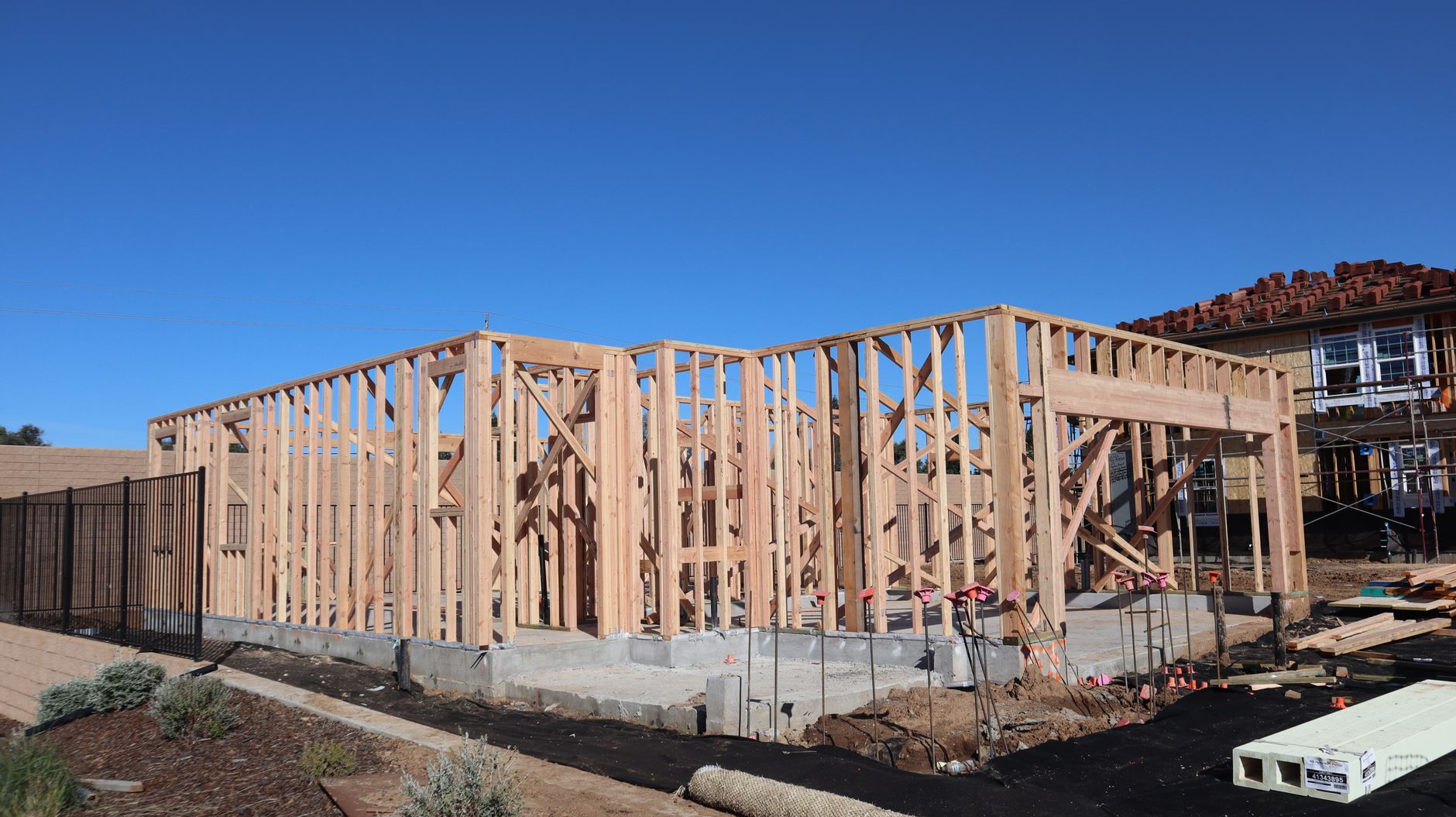
My life stood on four walls. Health. Wealth. Relationships. Craft. In 2014, three of them had been rubble, or had never been built at all. Exactly one was standing — Relationships — and it was the one I'd spent the least deliberate effort on.
And work? The job, the group, the practice I had poured myself into and mistaken for the foundation under everything?
Work was not one of the walls at all.
Work is the roof. It leans on the walls. It shelters a great deal and it matters enormously — but it does not hold the structure up. The walls do. And when you mistake the roof for the foundation, the day the roof blows off you find there was never anything underneath to keep you standing. I'd spent my whole career reading that diagram upside down.
This isn't sentiment. In one study of doctors, family support explained about a third of what protected them from burnout — and it did it by holding their sense of who they were in place, exactly when the work was trying to shake it loose. That word, identity, is the whole game. A surgeon's self can fuse so completely to the role that when the role disappears, many of us don't just feel unemployed. We report feeling lost — as though we've misplaced the self somewhere and can't find it. That is the real danger of treating work as a wall. When it goes, you don't only lose an income. You lose the person you thought you were.
So I build on purpose now.
I write in public, which I never used to. I run with an open Strava — my pace, my slow days, my bad weeks, visible to anyone who cares to look. I call my family for no reason at all, not because something has collapsed but precisely because nothing has. I keep the walls in good repair on ordinary days, when nothing is on fire, because I learned the hard way that you cannot build a wall in the week you suddenly need it. The materials aren't for sale in an emergency. You build in the calm so the structure is standing in the storm.
Here is the thing I finally understood, and it's the only thing I really want to leave you with. Work is not a wall. It leans on them. For all those years I believed my job was holding my life up. It was the other way around. Work was never holding my life up — my life was holding work up. The health, the small stubborn savings, the family, the things I did for love alone — those were carrying the work the whole time, quietly, while I stood there thanking the roof for the house.
If you're reading this as the young surgeon whose whole identity is the job right now — whose Health is a promise you keep breaking, whose Wealth is one employer's goodwill, whose Craft died somewhere in residency, whose Relationships get whatever's left after the last case — I'm not writing to frighten you. I'm writing because I was you, and no one drew me this picture in time.
You don't have to overhaul your life this month. You have to lay one brick in each wall, on an ordinary Tuesday, before anything forces you to. The run you take for no one. The savings that ask nothing of you. The call to your father for no reason at all. That's how walls get built — not in a heroic sprint after the collapse, but in small deposits made while the roof is still comfortably on.
Don't wait for the week that takes your job to find out which of your walls you actually built. Work will lean on them for as long as you work. And on the day it stops leaning — for someone reading this, that day is closer than they think — those walls are the only things left standing.
So here's the question I'd leave you sitting with tonight.
Which wall would hold, if your job left this week?
Go and check. Then go and build.
Author's Note: I don't write this from the far side of having it all figured out. I write it from the middle of still building — one wall stronger than it was in 2014, the other three still under scaffolding, and a father and sister I can never repay. If it's any use to you, the most surgeon thing you can do with it is diagnose your own house honestly and start laying bricks tonight. — Biswajit
Further Reading
For those who want to go deeper:
1. Brilliant hands, broken life: the trap nobody warned you about — Scalpel & Strategy
2. Impact of work-family support on job burnout and the mediating role of career identity — PMC
3. Effects of work-family conflict, social support and burnout on job satisfaction among primary care physicians — PMC
4. Network analysis of work-family support, career identity and job burnout — PMC