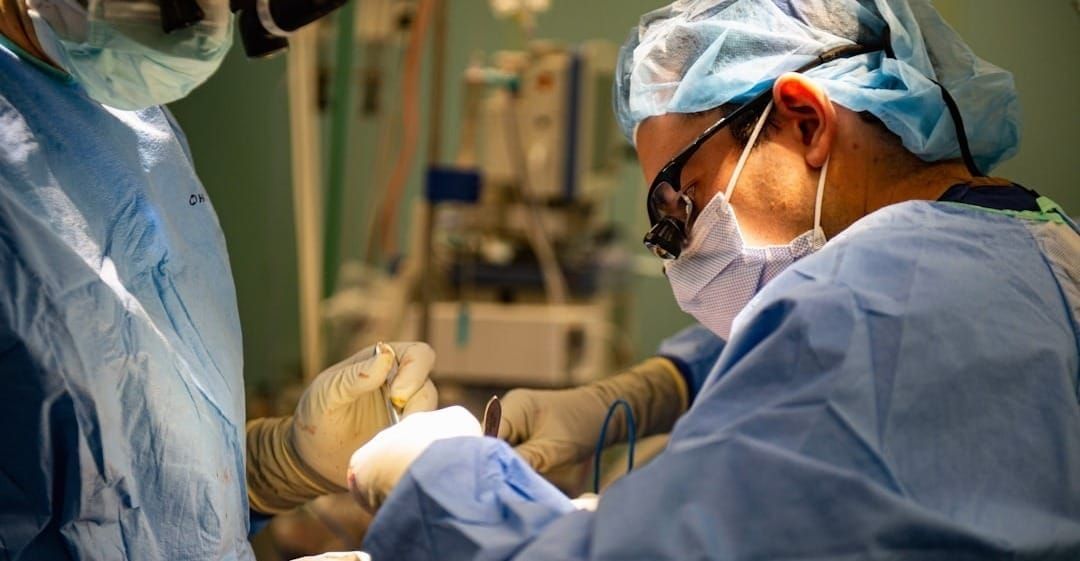
I want to tell you about a night I couldn't sleep, because it is the most expensive night I have ever spent on a surgery I was paid for. The patient was a 35-year-old man with a small ossicle under his patellar tubercle, probably calcified in his teens, sitting there for two decades, doing nothing. He had been coming to my clinic for months. Pain, he said. Always pain. The MRI showed the bone. The clinical examination didn't agree with the MRI. I tried PRP, medicines, physiotherapy. He kept insisting. He wanted me to take that piece of bone out.
I gave in.
In the OT, the bone was so small that for a long time I couldn't trace it. When I finally found it and took it out, I asked myself, with my hands still inside the joint, a question I had no business asking after the fact: do you actually believe this small piece of bone was causing his problem? I closed up. I went home. I lay in bed. The room was dark, and the swelling I knew would come on his knee was already real to me before it appeared on his body. I could see the quadriceps weakening. I could see the patellar tendon insertion failing. I could see him pulling out his own tendon a month from now, ending up worse than he had been the day he walked in. All this for what? A month of sick leave from work. That was the whole story. He wanted leave, and I had given him an operation to get it.
You know this feeling, even if your version is different. You've sat in your car after a clinic, engine off, doing the math on a case you knew you shouldn't have agreed to. You've smiled at a patient through the post-op review while a small voice asked who, exactly, you were doing this surgery for. You've lain awake at 2 AM over a number on a consent form that didn't match what your hands knew to be true. Most of us have done at least one operation we should have refused. Almost none of us write about it.
I am writing about it because the cost of that night was the integrity tax I refused to pay in advance. Having paid it both ways for twenty-five years, I now know that paying that tax up front is the cheapest deal a young surgeon will ever be offered.
The integrity tax is the income you forgo by refusing the wrong intervention, or the wrong price. That is the whole definition. It is the consultation you didn't get because your fee scared the price-shopper away. It is the surgery you didn't do because the indication wasn't there. On the surface, it is just lost money. The surgeon next door operated on the patient I refused; he billed for a knee replacement; I billed for nothing. He is up; I am down. That is what the ledger says on the day of the refusal.
The ledger is wrong. It only counts what happened in the next thirty minutes. It does not count what happens in the next thirty months. The integrity tax is highest in week one and decays toward zero. Each refusal makes the next one easier. What replaces it is a practice nobody can commoditise, because the patients who walk through your door have already self-selected past the version of you another hospital can replicate at half the price.
Here is the part nobody tells you in residency. The hospital is not on your side of the integrity tax. It is on the other side. Your hospital wants volume. The patient who haggles wants you to fold. Your own ambition, on a slow week, wants you to take the case. Three forces, one moment of refusal, and only one of them is sitting in your seat. The system makes its money the moment you stop refusing.
When I came to Muscat, I was charging 12 OMR for a consultation. In India, before that, I had been charging about ₹700, three to four OMR. The first time I considered going from 12 to 20, I sat with the number for a week. The fear was specific and physical. I was sure that the moment I raised the fee, every patient would walk to the specialist next door. I knew my volume was below optimal. I knew the hospital was watching the numbers. And I was going to raise my consultation fee? It felt suicidal.
I raised it. Some cash patients did walk. The majority were on insurance and didn't care. But the math of who walked told me something I hadn't expected. The cash patients who left at 20 were the same patients who, at 12, had spent the consult arguing about whether 12 was justified. They were the ones who, if I had ever proposed surgery, would have spent the next four months bargaining over the surgical fee, the implant brand, the bed category, and the discharge medications. The cash patients who stayed were the ones who, when I told them they needed an operation, scheduled it. Same fee. Different filter. Different practice.
The consultation fee is not your earning. It is your filter. Read that again. The consultation fee is not your earning. It is your filter. Earning comes from the surgical fee, the income you make by doing surgery. The consultation fee does something else. It calibrates the seriousness of the pool walking through your door. Every time you discount it, you are telling that pool one specific thing: the most price-sensitive version of you is welcome here, and the most serious version of you should probably go somewhere else. You will never out-earn that signal.
The Mechanism in Three Acts
If you want to use the integrity tax instead of just paying it, you need to see how it actually works. There are three movements.
The first movement is frame refusal. The moment a patient asks for a discount, two things can happen. You can enter the negotiation, or you can decline to enter it. Most surgeons enter, politely, professionally, with caveats, and they lose immediately. The moment you have entered, you have agreed that your fee is negotiable. The patient who got 10% off this week will ask for 15% next week, and the one he tells in the WhatsApp group will arrive next month assuming you discount. The first "no" has to be clean. If you hesitate, the patient reads it. He knows in three seconds that he has you psychologically, and the price-bargaining will not stop. I watched it happen to me, in slow motion, in my early Muscat years. The hesitation in my voice was audible. The patient heard it before I did. He didn't get cheaper surgery. He got every conversation that followed framed as a negotiation.
The second movement is self-selection. Invisible in the moment, obvious ten years later. Every patient who walks after a fee-firm refusal was never actually your patient. The patient who values 200 rupees more than your judgment is the one who, six months from now, will sue you for a complication that wasn't a complication. The patient who travelled across the country specifically to see you and then haggled at the counter, the one who said "I came all the way from Mabela, I came only to see you," had the capacity to pay all along. He was testing whether you would fold. The fee is not the gate. The way you respond to the fee being questioned is the gate.
The third movement is compounding. The first time I went from 12 to 20, I was scared for a week. The next adjustment didn't scare me. The first surgery I refused on a weak indication felt, for forty-eight hours, like rent money walking out. The next one didn't. By the tenth refusal, I had stopped counting the lost revenue, because I had begun to see what that revenue would have cost me. The surgeon who pays the tax for ten years has built a moat. The surgeon who never pays it has built nothing. One morning he will wake up to find ChatGPT can answer most of what his patients used to ask, the hospital across the road can do the procedure for less, and the only reason a patient should pick him is a reason he has not been quietly building.