The accusation got 8.2 million views. The explanation got 3,400.

You've felt it.
That cold drop in your stomach when a patient pulls out their phone mid-consultation. The split-second calculation: Are they texting? Or recording?
That moment when you're explaining a procedure, and you notice the phone angled toward your face instead of lying flat on the table. And you keep talking, because what else can you do — but now you're choosing every word differently. Now you're performing instead of explaining.
That 2 AM scroll through Google reviews, searching your own name, wondering if today is the day something appears that you can't explain away.
If you've never felt this, you will. If you have, you already know what I'm about to say.
We are all one patient away from destruction.
The Story That Keeps Me Awake
I was a postgraduate in Mangalore when the raid happened.
A retired judge — on a corruption-busting mission — walked into our government hospital. He didn't interview the doctors. He didn't review the records. He didn't ask for context. He walked straight to the patient ward and asked one question: "Did you have to pay any of the doctors?"
The patient said yes.
What the patient didn't explain — what nobody gave him a chance to explain — was that he'd paid for an implant. The cash went to a medical supplier, not to any doctor. We had created a system, my consultants and others, because the bureaucratic process for obtaining implants took weeks. A fresh fracture can't wait weeks. A patient in pain can't wait for paperwork to crawl through offices in Bangalore.
So we found a way. Patients paid suppliers directly. Surgeons got their implants on time. Patients got treated. Everyone benefited.
Until one complaint reached one judge.
When a doctor stepped forward to explain, the judge cut him off.
"Shut up, keep quiet. If you talk too much, I'll put you in jail."
That night, I couldn't sleep. Not because I was guilty. Because I realised how little guilt had to do with anything.
The next morning, every newspaper in Mangalore carried the story. Names splashed across headlines. A government hospital. Corrupt doctors. The system finally exposed.
The doctors called a press conference. They explained everything. The receipts. The suppliers. The patients who were grateful. The fractures that healed because we didn't wait for permission.
The next day, the newspapers published our response.
One small column. Tucked deep inside the paper.
The accusation: splash coverage across every edition.
The explanation: a paragraph that nobody read.
One assistant professor — a good man, a careful man, a man who had done nothing wrong — was so destroyed by the shame that he resigned. He packed up his family and moved to the UK. Not because he was guilty. Because his name was in the headline. Because his children heard whispers at school. Because his wife's relatives forwarded the article in family WhatsApp groups.
He didn't come back.
Twenty-five years later, I still think about him. He was just the visible one.
The Numbers That Should Terrify You
Here's what nobody taught us in medical school:
73% of patients read online reviews before selecting a doctor. More than half — 53% — will refuse treatment from a doctor with poor ratings. Your reputation is being built right now, in databases you've never seen, by patients you may not remember.
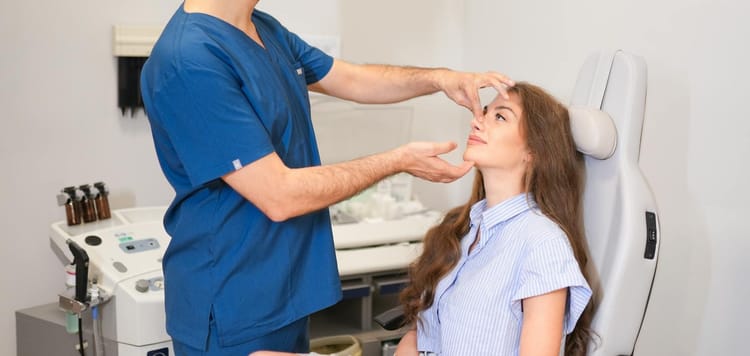
A dermatologist did everything right. Signed consent. Standard laser procedure. Post-procedure redness that was completely normal, completely expected, completely temporary.
Day 3 of healing — the patient filmed a 45-second clip. Dramatic music. Tears. A text overlay: "They only want your money."
8.2 million views.
Her response video — explaining the consent, the healing timeline, the perfect result at week six?
3,400 views.
Do the math. 99.96% of people who saw the accusation will never see the explanation. For them, she will always be a butcher. Forever.
Her bookings dropped 60% in a week. Her hospital called about "liability." Her daughter was bullied at school. "Your mom destroys faces."
Twenty years of ethical practice. Erased in 45 seconds.
The System Protects Everyone Except You
When the raid happened in Mangalore, I learned something that medical school never taught me.
The consultant who ran our department — a smart man, a careful man — didn't show up during the crisis. He sent his assistant professor to handle things. His name never appeared in a single newspaper.
The assistant professor's name was splashed everywhere.
The consultant stayed. Reputation intact. The assistant professor fled the country.
This is how the system works: When the mob comes, the institution doesn't defend its physicians. It defends its image. The medical superintendent kept distance. The head of department stayed away. The government minister didn't issue a single statement.
They waited. They let the junior take the hit. They emerged after the dust settled, reputations undamaged.
The brutal truth nobody will say out loud: the system is designed to protect everyone except the doctor and the nurse.
You are the face. You are the visible target.
You are expendable.
To the Surgeon Reading This at 2 AM
I know you.
You're lying in bed, phone in hand, unable to sleep. Maybe you had a difficult patient today. Maybe you're replaying a conversation, wondering if you said something that could be twisted. Maybe you just read about another colleague destroyed by a viral post, and you're wondering when it will be your turn.
I know the weight you carry.
The fear that one misunderstanding could erase everything you've built. The knowledge that your seniors have reputations to shield them, and you have nothing. The isolation of knowing that nobody outside medicine understands what this feels like — the vulnerability of being the visible one in a system designed to sacrifice the visible.
If you're a senior surgeon with 25 years of credibility, a viral accusation hurts — but you have a buffer. Patients who trust you. Colleagues who'll vouch for you. A financial cushion.
If you're 28 years old, three years out of residency, building your practice on thin margins — you have none of that.
One viral video could destroy referrals you've spent years building. It could give seniors ammunition against you. It could make hospitals see you as liability instead of asset. It could mean leaving your city, starting over, explaining to your family why everything changed.
This isn't abstract. This is your wife's parents seeing accusations before you can explain. Your daughter watching strangers call her father a criminal. The senior who never liked you forwarding the video with commentary: "I always knew something was off."
I see you.
And I need you to know: it's not your imagination. The fear is real. The vulnerability is real. And you're not paranoid — you're paying attention.
What You Can Do (And What You Can't)
I wish I could tell you that ethical practice protects you. That if you do everything right, you'll be safe.
But the dermatologist did everything right. The doctors in Mangalore did everything right. The assistant professor who left the country did everything right.
The difference between the surgeon who gets destroyed and the surgeon who survives is often just luck. Whether you treated the one patient who needed content for their Instagram. Whether the judge chose your hospital instead of the one across town.
Preparation beats hope. But it doesn't guarantee anything.
Document everything. Photograph consent forms. Put up notices about phones in your procedure room. Build a professional presence online so that when someone searches your name, they find your words — not just accusations.
But I'll be honest: it's going to happen anyway. Phones are getting smarter. Patients are getting bolder. We cannot prevent it entirely.
All we can do is be careful with every word we speak. And know that anything — anything — can be taken out of context and blown out of proportion.
What We Owe Each Other
The judge in Mangalore eventually withdrew his cases. The district commissioner intervened. The legal threats disappeared. Everyone went back to work.
But the scar remained.
The assistant professor who fled to the UK — he didn't come back. His children pulled from their schools. His entire life rebuilt in another country. Because the system he served refused to protect him.
The newspapers got their splash. The algorithm got its engagement. The judge got his headline.
The destroyed doctor got nothing.
This is the trap we're all walking around: The accusation spreads to millions. The explanation reaches thousands. And 99.96% of people will always believe the accusation, because that's the only version they ever saw.
We're all one patient away from this. One phone. One misunderstanding. One authority figure who doesn't want to listen.
The system won't protect you. The institution won't defend you. Your seniors might not even acknowledge you.
But we can protect each other.
Not with lawyers or PR firms. With awareness. With warning each other. With making sure the young doctor at 2 AM — exhausted, alone, wondering if the sacrifice is worth it — knows that this threat is real.
And that they're not alone in carrying it.
Every surgeon reading this has felt that phone pointed at them and wondered. Every surgeon has heard about a colleague destroyed by something they couldn't control. Every surgeon has lain awake calculating the odds.
This is the invisible weight we carry. The tax we pay for being the visible face of a system designed to sacrifice us.
Nobody taught us this in medical school. Nobody warned us that our reputation could be erased faster than we built it. Nobody told us that the truth travels slower than outrage, and that the algorithm doesn't care about consent forms.
But now you know.
And knowing is the first step. Preparing is the second. Protecting each other is the third.
The surgeon you'll be in five years is watching what you prepare for today.
We're fighting the same battle. We might as well fight it together.
Author's Note:
I was in that hospital in Mangalore. My name didn't appear in the papers — by luck, not by merit.
But I watched a good man's career end over a misunderstanding that took thirty seconds to create and weeks to correct.
Twenty-five years later, I still think about him. He did nothing wrong. He was just the visible one.
If this resonated with you — if you've felt that cold drop in your stomach when a phone appears, if you've scrolled reviews at 2 AM, if you've wondered when it might be your turn — share this with a colleague who needs to hear it.
We're not alone in this. And the more of us who know, the better we can watch each other's backs.
— Biswajit

Member discussion